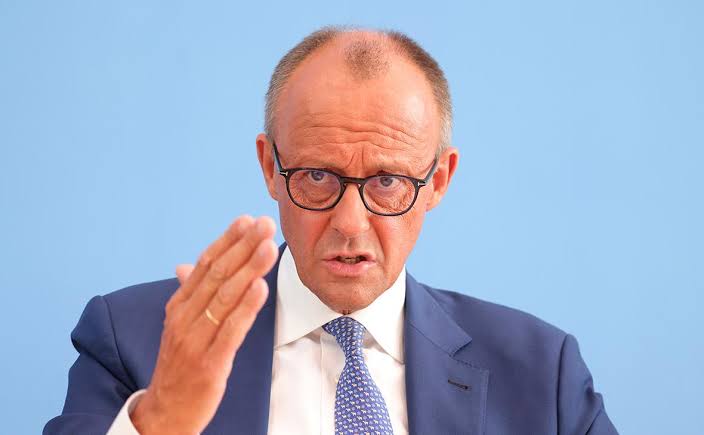
A major decision puts Germany's government under pressure
Germany is facing one of its most important economic policy debates in recent years.
After weeks of negotiations, lawmakers have reached a preliminary agreement on a federal budget that could significantly increase government borrowing in 2027.
The proposed spending package totals approximately €561 billion and includes more than €210 billion in new borrowing.
For Chancellor Friedrich Merz, the agreement represents an important step toward implementing his government's economic and infrastructure priorities.
However, the scale of the borrowing has also intensified debate about public finances, economic growth and the long-term consequences of government spending.
The central question is becoming increasingly difficult to ignore:
Can Germany invest enough to strengthen its economy without creating financial pressures for future generations?
The enormous figures behind the agreement
On November 13, Germany's parliamentary budget committee approved a proposed spending plan for 2027.
The package includes approximately €210.4 billion in new borrowing across different budget mechanisms.
According to Reuters, this would represent Germany's second-largest annual borrowing total since the Second World War, exceeded only by the pandemic-era borrowing of 2021.
Part of the financing is intended to support investment in infrastructure and national defence.
Germany has faced criticism over the condition of its roads, bridges, railways and other public infrastructure.
The government also wants to modernize military capabilities and strengthen national security.
Supporters of increased public investment argue that these areas have suffered from insufficient funding for many years.
Critics, however, question whether the current budget provides enough structural reform to ensure sustainable growth.
The proposal still requires parliamentary approval before becoming a final budget.
Friedrich Merz and the challenge of economic recovery
Friedrich Merz became Germany's federal chancellor in May 2025.
His political agenda has emphasized economic competitiveness, investment, reduced bureaucracy and stronger European security.
However, translating these priorities into government policy has not been straightforward.
Germany has struggled with economic challenges including high energy costs, weak investment, pressure on industrial businesses and international competition.
Manufacturers have also had to adapt to rapid technological changes.
At an economic conference in Berlin on November 4, Merz acknowledged that Germany's economic outlook had improved but that a self-sustaining recovery had not yet been achieved.
At the time, the government's economic growth forecast for 2026 stood at approximately 1.3%.
While this suggested an improvement in economic conditions, the chancellor emphasized the continuing need for reforms.
Unexpected compromises inside the governing coalition
One of the most interesting developments surrounding the budget negotiations concerns the compromises reached between coalition partners.
Merz's conservative CDU/CSU alliance governs alongside the center-left Social Democratic Party.
The two political groups have different priorities regarding taxation, social spending and fiscal policy.
During the latest negotiations, several previously discussed measures were delayed or abandoned.
A planned tax on plastic packaging was shelved.
The proposed introduction of a tax on sugary drinks was postponed.
Some planned reductions in welfare spending were also reversed.
Meanwhile, the coalition failed to secure funding for a broader reduction in electricity taxes that Merz had supported.
These developments illustrate the difficulties involved in balancing political priorities within a coalition government.
For some observers, the compromises demonstrate the necessity of cooperation.
Others argue that postponing reforms could make Germany's longer-term fiscal challenges more difficult to address.
Why electricity prices remain a major concern
Energy costs have become one of the most important issues facing German households and industrial businesses.
Industries such as chemicals, steel and manufacturing depend heavily on reliable and competitively priced electricity.
Higher energy costs can influence production decisions, investment plans and international competitiveness.
For households, electricity prices directly affect everyday expenses.
Merz has supported measures intended to reduce the cost burden on consumers and businesses.
However, proposed electricity-tax reductions have encountered financial constraints.
This creates a difficult policy choice.
Reducing taxes may provide relief, but it can also reduce government revenue at a time when public spending requirements are increasing.
Finding a sustainable balance will remain an important challenge for the government.
Can infrastructure investment revive German industry?
Germany's industrial economy has historically been a major source of economic strength.
Its automotive manufacturers, engineering companies and chemical producers have established extensive international business relationships.
But maintaining this position requires continuous investment.
Modern production depends on efficient transport networks, reliable energy supplies and advanced digital infrastructure.
The Merz government views infrastructure investment as one potential way to improve economic performance.
Better transport connections could reduce logistical costs.
Modernized energy networks could support industrial development.
Digital infrastructure could help businesses adopt emerging technologies, including artificial intelligence.
However, investment projects often take years to complete.
Their economic impact depends on effective implementation, realistic budgets and the ability to overcome administrative delays.
A debate about debt and future generations
The proposed borrowing figures have generated an important public-policy debate.
Supporters of higher borrowing argue that some investments cannot be postponed indefinitely.
They believe that modernizing infrastructure and strengthening defence could generate long-term benefits that justify additional spending.
Critics emphasize the risks associated with increasing public debt.
Higher borrowing can create future interest obligations and reduce financial flexibility.
Economists have also raised questions about whether Germany is doing enough to control long-term spending pressures related to pensions and other government commitments.
Both sides acknowledge that Germany faces substantial economic challenges.
Their disagreement concerns the best combination of investment, spending restraint and structural reform.
Germany's role in Europe's economic future
Developments in Germany have implications beyond its national borders.
As Europe's largest economy, Germany plays an important role in European manufacturing, trade and investment.
Economic decisions made in Berlin can influence supply chains and business expectations across the European Union.
Germany is also an important participant in discussions about European defence, technological development and economic competitiveness.
Under Merz, the government has emphasized the need for Europe to strengthen its ability to respond to international challenges.
The chancellor is scheduled to host a meeting with European partners in Berlin on November 19 to discuss Ukraine and European security.
This demonstrates how domestic economic decisions increasingly intersect with international security priorities.
What happens next?
The 2027 budget proposal will now move through the remaining parliamentary process.
Lawmakers must determine whether the agreed spending and financing arrangements should become law.
The government will also face the challenge of implementing the investments it has promised.
Attention is likely to remain focused on economic growth, industrial competitiveness, energy costs and the effectiveness of public spending.
The outcome will influence assessments of the government's economic strategy.
However, it is too early to determine whether the proposed measures will deliver the improvements their supporters expect.
Economic performance depends on multiple factors, including international markets, business investment and geopolitical conditions.
Conclusion: A defining economic challenge
The latest budget negotiations reveal the difficult choices facing Chancellor Friedrich Merz and Germany's governing coalition.
The country needs investment in infrastructure, defence and economic modernization.
At the same time, increased borrowing raises important questions about debt sustainability and future public spending.
The agreement reached in November 2026 represents a significant step, but many challenges remain unresolved.
Germany's next economic chapter will depend not only on how much money the government spends, but also on whether that spending delivers lasting improvements in productivity, competitiveness and living standards.
For Europe's largest economy, the stakes extend far beyond a single budget.